Showing posts with label oppression. Show all posts

Saturday, April 23, 2011

Just Provider and Liberator

"He gives justice to the poor and food to the hungry. The Lord sets prisoners free."

Psalm 146:7 Contemporary English Version (CEV)


Based on this verse, how would you describe "the Lord"?

"Justice to the poor". . .would this description keep some people away from this God? 

What does the assumption of the presence of oppression and the need for intervention say to you about the values of God?

Sunday, March 06, 2011

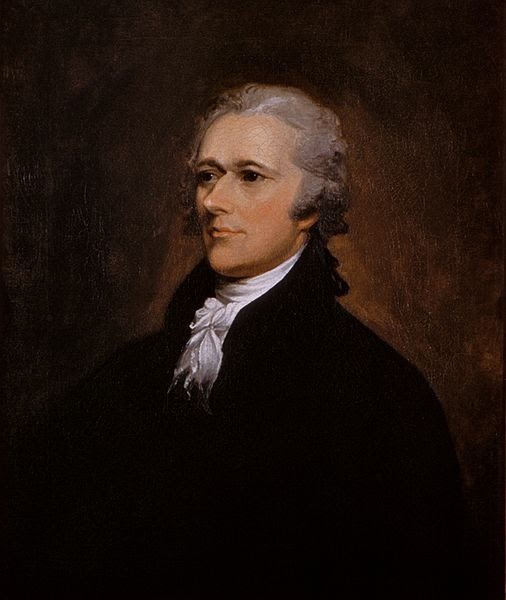
American wisdom from a "founder"

"Happy it is when the interest which the government has in the preservation of its own power coincides with a proper distribution of the public burdens and tends to guard the least wealthy part of the community from oppression!"

Alexander Hamilton
Federalist Papers, #36


Sunday, June 20, 2010

Poverty and the wickedness that creates it. . .

Job 24

The wicked remove landmarks;
they seize flocks and pasture them.

They drive away the donkey of the orphan;
they take the widow’s ox for a pledge.

They thrust the needy off the road;
the poor of the earth all hide themselves.

Like wild asses in the desert
they go out to their toil,
scavenging in the waste-land
food for their young.

They reap in a field not their own
and they glean in the vineyard of the wicked.

They lie all night naked, without clothing,
and have no covering in the cold.

They are wet with the rain of the mountains,
and cling to the rock for want of shelter.
There are those who snatch the orphan child from the breast,
and take as a pledge the infant of the poor.

They go about naked, without clothing;
though hungry, they carry the sheaves;
between their terraces they press out oil;
they tread the wine presses, but suffer thirst.

From the city the dying groan,
and the throat of the wounded cries for help;
yet God pays no attention to their prayer.

There are those who rebel against the light,
who are not acquainted with its ways,
and do not stay in its paths.

The murderer rises at dusk
to kill the poor and needy,
and in the night is like a thief.

Monday, September 22, 2008

So much for "free markets"

Decisions about how systems and institutions work have consequences in the lives of real people.

It's just a fact.

This is particularly true when it comes to public policy relative to work, wages, protection or the lack thereof from so-called "free markets," home ownership, education, nutrition. . .the list goes on.

So far this year in the U. S. we have seen the loss of over 600,000 jobs.

Home foreclosures continue to soar.

During the last chaotic week, we've witnessed the near meltdown of our financial markets, a series of events that rivals the circumstances preceding the Great Depression. Major, historic financial institutions failed or have been bought for a song.

People who argue ad nauseum for unregulated, "free markets" make assumptions about human nature that simply don't hold up. When living in an effective community in which the rights, needs and dreams of all are to be honored; common values, mores and standards of behavior need to be regulated.

We are now witnessing the results of a policy trend committed to deregulation that has been in play since at least 1980.

Completely "free markets" might be something to consider if we all were operating from the same position of strength and opportunity. But, of course, this is not the case today and will never be the case.

Regulation imposes safety guards against the exploitation that always results when systems are built to maximize profit for one group at the expense of other groups, usually much larger in sheer numbers, but much weaker in economic power and political influence.

No system of regulation is perfect. But, it doesn't need to be perfect, just workable, consistent and engaged in the important work of defining and enforcing standards of fairness and equity for everyone.

Consider the subprime mortgage crisis. Lots of people in this country have been talked into or better, pressured into mortgage agreements that allowed them to purchase homes far beyond their ability to pay. The agreements were designed not to assist the prospective homeowner, but the lender. In fact, some deals worked better for lenders when agreements failed after a couple of years thanks to credits and write offs that were built into the systems at work in such real estate transactions. Variable rate mortgages, coupled with sub-prime approaches to financing the deals at the outset, vaulted the nation to the brink of absolute economic disaster.

Greed kills.

Possibly home buyers should have been smarter. But, really now, let's face it, that is not what the system required or even desired. And then, there is the nation's attitude toward homeownership as an essential element in realizing the "American dream."

Since the mid-1990s, we've observed a commitment on the part of the federal government in both Clinton and Bush administrations to open up home ownership to more and more Americans.

As this policy unfolded, it became clear that a major part of this commitment would be financed by cutting funding from programs designed for the poorest Americans--we watched as the U. S. Department of Housing and Urban Development (HUD) cut funding for programs aimed at people who likely will never own homes to benefit those who might play in the amazing expansion of ownership made possible by unregulated markets.

While everyone agrees that the number of Americans owning homes needs to increase, we grew more and more uncomfortable with how the new process was being funded with both public and private dollars. Furthermore, our government explicitly and implicitly encouraged private sector funders to get in the game on terms that were favorable to lenders, but not necessarily the new homeowners.

No regulation.

"Free markets" often cut people to shreds because they are not designed with the community, with everyone in mind. (By the way, can we agree that Wall Street is not the community for which we are most concerned here?)

Greed kills.

Paul had it right when he warned that "the love of money is the root of all evil."

I'm sure I'll catch it big time from lots of folks who read here who believe that freedom in the marketplace is the most sacred value of all.

Frankly, if you can make that argument this week, I know there is nothing I can say to change your mind.

But, I'm not writing for you. I continue to post because I believe sound public policy devoted to justice and fairness will be a big part of any solution to the problems facing both the poorest of the poor and the middle class in our nation. And, it is crucial to sustaining workable communities.

In fact, I'm trying to get these two groups to see how much they have in common these days! If these two groups ever partner with one another and consider how their mutual self-interests could work together, we'll wake up in a new America.

One last note. Through all sorts of situations and circumstances from Y2K to 9-11 to the War in Iraq to escalating fuel costs to our current financial crisis, the poor serve as my instructors. People who know grinding poverty teach me how to cope and to live one day at a time. Their friendship and faith is a priceless gift in my life.

Markets come and go.

The faithful endure.

.

Thursday, February 28, 2008

The high cost of pay day loans. . .


Not long ago I received the following report from the Center for Public Policy Priorities in Austin, Texas. If you don't know CPPP, you need to, especially if you care about the challenges facing marginalized, low-income individuals and communities. Check out their website at: http://www.cppp.org/research.php?aid=754.

This particular report deals with predatory lenders and the impact of so-called "payday loans" on the poor in Texas. This is a case of our state needing to regulate an industry that is oppressing the already oppressed. People of faith should speak up clearly and often.
_________________________________

PAYDAY LENDING—HURTING TEXAS FAMILIES

It’s the American Dream that if you work hard you get ahead.

But with the high cost of living these days, that isn’t always the case. Sometimes families run short of cash and turn to payday loans—short-term loans that give Texans a cash advance on their paychecks, Social Security payments, or veteran’s benefits. Millions of families use these loans when they are short of cash, but the high cost outweighs the convenience. Interest rates start at 400 percent APR and can surpass 1,000 percent, and it is typical for a worker to pay $180 in interest on a 10-day, $700 loan. More often than not, the individual is unable to repay the full amount within the short repayment period, and the debt balloons. In fact, most payday lending volume comes from individuals forced by the cost of the original loan to take out another and another. We’ve seen the devastating impact of subprime lending on the economy.

But what do payday loans cost families and communities in Texas?

New Study Calculates Financial Impact of Payday Lenders on Texas

A recent study by the national Brookings Institution calculates the financial impact of payday lending on Austin, Dallas, El Paso, Houston, Fort Worth, and San Antonio. In these Texas cities alone, unregulated payday outfits lent $1.14 billion in 2006. Statewide, these outfits lent at least $2 billion. To obtain these cash advances, working Texans paid at least $400 million in interest and fees, not to mention bank overdraft fees and credit costs ensuing from brutal collection practices. In other words, each year, payday loans cost Texas families nearly double what the state sets aside for financial aid so that aspiring students can attend higher education.

To view fact sheets for the six Texas cities, visit http://www.cppp.org/research.php?aid=754.

Responsible Lenders Offer Better Options

Responsible lenders offer better options than payday loans. Several credit unions and banks are now offering short-term loans at a fraction of the cost of a payday loan. The FDIC is also partnering with three Texas banks in a two-year pilot project to identify best practices in affordable small-dollar loan programs that can be replicated by other financial institutions. These banks include Main Street Bank (Kingswood), Amarillo National Bank (Amarillo), and Liberty National Bank (Paris).

Responsible lending needs to be encouraged.

Texas Needs to Regulate Payday Lenders

To see our analysis of the problems with payday lending and our policy recommendations for standards and accountability, read As Payday Lending Spreads across Texas, Can It be Reformed or Regulated? (Dec. 2006) at http://www.cppp.org/research.php?aid=594&cid=2&scid=2 and Unregistered and Unregulated: Payday Lenders Put Consumers
at Risk and Flout Texas Usury Laws
(Aug. 2005) at http://www.cppp.org/research.php?aid=443&cid=2&scid=2.
______________________________________________

Here's the Dallas fact sheet on the problem:

Number of non-bank check cashers 107
Number of payday lenders 98
Total value of checks cashed $246,742,765
Total value of payday loans $171,223,901
Total fees on checks cashed $6,168,569
Total fees on payday loans $27,823,884
Number of pawnshops 88
Number of banks and credit unions 366
Total value of pawn loans $21,157,915
_____________________________________________________

What should be done? Any ideas?

Saturday, February 23, 2008

An unsettling blessing. . .

May God bless you with discomfort
at easy answers, half truths, and superficial relationships
so that you may live deep within your heart

May God bless you with anger
at injustice, oppression and exploitation of people
so that you may work for justice, freedom and peace

May God bless you with tears
to shed for those who suffer pain, rejection, hunger and war
so that you may reach out your hand to comfort them and
to turn their pain into joy

And may God bless you with enough foolishness
to believe that you can make a difference in the world
so that you can do what others claim cannot be done
to bring justice and kindness to all our children and the poor.

--a Franciscan Benediction

.

Friday, February 15, 2008

Justice denied, justice upheld

Ken Follett weaves a marvelous tale set in 12th century England in his The Pillars of the Earth. Drop in for a moment to witness justice denied to a laboring girl and to see what happens when, just in time, relief arrives.

Next, two young men dragged a whole sack of wool up to the counter. The merchant examined it carefully. "It's a full sack, but the quality's poor," he said. "I'll give you a pound."

Aliena wondered how he could be so sure the sack was full. Perhaps you could tell with practice. She watched him weigh out a pound of silver pennies.

Some monks were approaching with a huge cart piled high with sacks of wool. Aliena decided to get her business done before the monks. She beckoned to Richard, and he dragged their sack of wool off the cart and brought it up to the counter.

The merchant examined the wool. "Mixed quality," he said. "Half a pound."

"What?" Aliena said incredulously.

"A hundred and twenty pennies," he said.

Aliena was horrified. "But you just paid a pound for a sack!"

"It's because of the quality."

"You paid a pound for poor quality!"

"Half a pound," he repeated stubbornly.

The monks arrived and crowded the stall, but Aliena was not going to move: her livelihood was at stake, and she was more frightened of destitution than she was of the merchant. "Tell me why," she insisted. "There's nothing wrong with the wool, is there?"

"No."

"Then give me what you paid those two men."

"No."

"Why not?" she almost screamed.

"Because nobody pays a girl what they would pay a man."

She wanted to strangle him. He was offering her less than she had paid. It was outrageous. If she accepted his price, all her work would have been for nothing. Worse than that, her scheme for providing a livelihood for herself and her brother would have failed, and her brief period of independence and self-sufficiency would be over. And why? Because he would not pay a girl the same as he paid a man!

The leader of the monks was looking at her. She hated people to stare at her. "Stop staring!" she said rudely. "Just do your business with this godless peasant."

"All right," the monk said mildly. He beckoned to his colleagues and they dragged up a sack. . . .

. . . "How many sacks have you got?" said the merchant.

A young monk in novice's robes said: "Ten," but the leader said: "No, eleven." The novice looked as if he was inclined to argue, but he said nothing.

"That's eleven and a half pounds of silver, plus twelvepence." The merchant began to weigh out the money.

"I won't give in," Aliena said to Richard. "We'll take the wool somewhere else--Shiring, perhaps, or Gloucester."

"All that way! And what if we can't sell it there?"

He was right--they might have the same trouble elsewhere. The real difficulty was that they had no status, no support, no protection. The merchant would not dare to insult the monks, and even the poor peasants could probably cause trouble for him if he dealt unfairly with them, but there was no risk to a man who tried to cheat two children with nobody in the world to help them.

The monks were dragging their sacks into the merchant's shed. As each one was stashed, the merchant handed to the chief monk a weighed pound of silver and twelve pennies. When all the sacks were in, there was a bag of silver still on the counter.

"That's only ten sacks," said the merchant.

"I told you there were only ten," the novice said to the chief monk.

"This is the eleventh," said the chief monk, and he put his hand on Aliena's sack.

She stared at him in astonishment.

The merchant was equally surprised. "I've offered her half a pound," he said.

"I've bought it from her," the monk said. "And I've sold it to you." He nodded to the other monks and they dragged Aliena's sack to the shed.

The merchant looked disgruntled, but he handed over the last pound bag and twelve more pennies. The monk gave the money to Aliena.

She was dumbstruck. Everything had been going wrong and now this complete stranger had rescued her--after she had been rude to him, too!

Richard said: "Thank you for helping us, Father."

"Give thanks to God," said the monk.

Aliena did not know what to say. She was thrilled. She hugged the money to her chest. How could she thank him? She stared at her savior. He was a small, slight, intense-looking man. His movements were quick and he looked alert, like a small bird with dull plumage but bright eyes. His eyes were blue, in fact. The fringe of hair around his shaved pate was black streaked with gray, but his face was young. Aliena began to realize that he was vaguely familiar. Where had she seen him before?

The monk's mind was going along the same path. "You don't remember me, but I know you," he said. "You're the children of Bartholomew, the former earl of Shiring. I know you've suffered great misfortunes, and I'm glad to have a chance to help you. I'll buy your wool anytime."

Aliena wanted to kiss him. Not only had he saved her today, he was prepared to guarantee her future! She found her tongue at last. "I don't know how to thank you," she said. "God knows, we need a protector."

Well, now you have two," he said. "God and me."

Aliena was profoundly moved. "You've saved my life, and I don't even know who you are," she said.

"My name is Philip," he said. "I'm the prior of Kingsbridge. (pages 389-391)

Sunday, July 29, 2007

A hymn heard in church a week ago

James Montgomery wrote his hymn, Hail to the Lord's Anointed, in December 1821.

Obviously not privy to the ideology of 20th century liberationists, Montgomery understood the message of Jesus and the ancient church.

We sang his song last week in church.

I was moved.

Here are the first two verses:

Hail to the Lord’s Anointed,
Great David’s greater Son!
Hail, in the time appointed,
His reign on earth begun!
He comes to break oppression,
To set the captive free,
To take away transgression,
And rule in equity.

He comes with succor speedy
To those who suffer wrong;
To help the poor and needy,
And bid the weak be strong;
To give them songs for sighing;
Their darkness turn to light,
Whose souls, condemned and dying,
Are precious in His sight.

Montgomery's hymn was his interpretation of Psalm 72, a tribute to and job description for the reigning king and ultimate political figure in Israel.

We would do well to spend time reflecting on the message of both hymn and ancient psalm, especially as we consider the place of church and government in the nation's life and circumstance.

Sunday, July 08, 2007

A theology for the street

Across the years, people have given me strange looks when I confess that my faith has been shaped significantly by reading liberation theology. I do what I do in large part because of what I have discovered while exploring this very rich school of thought.

Years ago, while in seminary, I enjoyed the good fortune of sitting in a summer school class with Dr. James Cone from Union Theological Seminary in New York City. Cone's course, Black Liberation Theology, provided me with hope, courage and even healing. I found him even more amazing in person than in print, which is saying a lot!

I suppose what I find most attractive about the thought of writers like Cone and Gustavo Gutierrez is the fact that everything is rooted deeply in the here-and-now.

Everything is practical.

Action in the real world is the key to every expression of faith.

Instead of becoming lost in the past or distracted by a future that will be experienced on a completely different plane of existence, thinkers like Gutierrez and Cone keep calling me back to the street and its reality.

In a system of thought like this, it becomes almost impossible for middle class types like me to rationalize my failure to engage the pain, injustice, suffering and oppression of my world.

My responsibility in this day happens to be this world or, better, that part of the world where I will find myself living today.

There is not much time for dwelling on the past, except as precursor for the present that is currently "in my face."

There is little reason to focus much on the future, it will take care of itself.

My call is to live and to act in faith for the transformation of the world as I find it.

Liberation thought demands an entering into the life of the world. To put it theologically, it calls for radical incarnation. I must enter the pain and the struggle of this world for the sake of and alongside the poor, the marginalized and the oppressed.

There is no way to heaven but through the earth.

My responsibility is the life and the world in which I find myself. In community with others, I am called to live out my faith from a street level perspective.

The old hymn, "This World Is Not My Home," might be true; but this world is without a doubt my current assignment, it is where I am rooted by faith, and I dare not "pass through" without thought, sacrifice and focused attention. It is what I have been given and called to engage.

Maintaining this very real, practical and "down-to-earth" focus keeps me on track. And, in this regard, I find reading Cone, Gutierrez and other liberationists to be most helpful.

They bring my faith to life and into my world.

Sunday, June 03, 2007

Bad Laws and Community


"Unjust laws exist; shall we be content to obey them, or shall we endeavor to amend them, and obey them until we have succeeded, or shall we transgress them at once?"
- Thoreau, Civil Disobedience

I say that you cannot administer a wicked law impartially. You can only destroy. You can only punish. I warn you that a wicked law, like cholera, destroys everyone it touches -- its upholders as well as its defiers.
- Jerome Lawrence and Robert E. Lee, Inherit the Wind

Isaiah 10:1-4
.

Saturday, May 26, 2007

Amos. . .little heard, much needed

Eugene H. Peterson's The Message is a refreshing and challenging way to read the Bible. The sub-title of Peterson's interpretive translation is "The Bible in Contemporary Language."

It is that alright!

In addition to the interpretation of the original languages, Peterson provides a background introduction to each of the sixty-six books of the biblical text.

Not long ago, someone pointed me to his introductory comments on the words of the Hebrew prophet, Amos. They are worth sharing, at least for the strong of heart!
______________________

More people are exploited and abused in the cause of religion than in any other way. Sex, money, and power all take a back seat to religion as a source of evil. Religion is the most dangerous energy source known to humankind. The moment a person (or government or religion or organization) is convinced that God is either ordering or sanctioning a cause or project, anything goes. The history, worldwide, of religion-fueled hate, killing, and oppression is staggering. The biblical prophets are in the front line of those doing something about it.

The biblical prophets continue to be the most powerful and effective voices ever heard on this earth for keeping religion honest, humble, and compassionate. Prophets sniff out injustice, especially injustice that is dressed up in religious garb. They sniff it out a mile away. Prophets see through hypocrisy, especially hypocrisy that assumes a religious pose. Prophets are not impressed by position or power or authority. They aren't taken in by numbers, size, or appearances of success.

They pay little attention to what men and women say about God or do for God. They listen to God and rigorously test all human language and action against what they hear. Among these prophets, Amos towers as defender of the downtrodden poor and accuser of the powerful rich who use God's name to legitimize their sin.

None of us can be trusted in this business. If we pray and worship God and associate with others who likewise pray and worship God, we absolutely must keep company with these biblical prophets. We are required to submit all our words and acts to their passionate scrutiny to prevent the perversion of our religion into something self-serving. A spiritual life that doesn't give a large place to the prophet-articulated justice will end up making us worse instead of better, separating us from God's ways instead of drawing us into them.

Saturday, May 19, 2007

Watch 60 Minuties Sunday. . .please pass this on to friends


Plan now to tune in to 60 MINUTES tomorrow evening on CBS televison. A segment of the program is entitled "Dumped on Skid Row."

Here is an advance publicity piece that we received from CBS television describing the segment:

Are some Los Angeles hospitals simply throwing homeless patients out on the street after discharging them, literally dumping them on Skid Row --even if they come from other places in Los Angeles and are in no condition to fend for themselves?

While there have been allegations of hospital dumping for years, people only started paying attention recently, after several shelters installed special cameras on the street to try to capture the practice.

Anderson Cooper’s investigation will air this Sunday, May 20, on 60 MINUTES (7PM ET/PT on CBS).

For more details you can check out the CBS News website at:

http://www.cbsnews.com/stories/1998/07/08
/60minutes/main13502.shtml.

If you have any further questions, please contact Robin Sanders at sandersr@cbsnews.com.

I continue to be amazed at just how expendible the poor have become in this country.

I hope you'll watch the report.

Please pass this post on to your friends, family and associates.
.

Monday, May 14, 2007

Poverty Markets and Robbing the Poor

If you want a realistic look at predatory lending, high-cost financial services, and other "ordinary rip-offs" endured by low-income persons in the United States today be sure and visit this link to the cover story of the latest issue of Business Week, no liberal rag I might add: http://www.businessweek.com/magazine/
content/07_21/b4035001.htm?chan=top+news_top+news+index_best+of+bw+this+week.

I expect the story will sicken you, as it did me.

Israel in the days of the Hebrew prophet Amos (circa 8th century B.C. E.) had nothing on the United States today! Might do us all good to read the words of Amos today, right after we read the Business Week article. Let me know when you hear either quoted in church.

What with largely unregulated loan sharks, disguised as reputable businesses; selling used cars complete with strategies to repossess a part of the business plan; rent-to-own electronics and appliances; payday loans; income tax services and extremely high interest credit cards; poor folks in this country discover just one more way to slide further and further into the darkness of not just poverty, but generational poverty. The Business Week report demonstrates that these businesses plan to exploit the poor as standard operating procedure on the way to remarkable profits.

Unchecked capitalism such as this, as well as the injustices it spawns, should be reigned in for the good of the entire society.

Behind this story is a fact that others in the business world should take note of. The subprime and predatory lenders have moved in on the poor for one simple reason: the poor have money and constitute a viable market opportunity.

Here's my question. If there is an opportunity for the shady, why not the legitimate?

For years we have been asking for grocery retailers to set up business in the poorer sections of Dallas, especially in the inner city neighborhoods of South Dallas. Our low-income friends need and purchase food more often and frequently than credit! The market is there. Where is the company willing to step up to the unique challenges of these areas of our city and deliver what would in many low-income neighborhoods be a smashing business success?

I doubt anyone starts breaking ground tomorrow, but I'll keep asking anyway.

Friday, March 16, 2007

Living in the Promise Land

Events of this week force upon my heart and mind thoughts of America and its cities and, even more, thoughts of the great "American experiment."

What, in fact, is the genius of this nation?

I believe the answer is found somewhere along the continuum of freedom, mutual respect, openness to change and a living commitment to authentic human community.

At one point this week, as I was buried in such thoughts, I heard Willie Nelson singing the lyrics of David Lynn Jones, "Living in the Promise Land." In its own way the song says it all.

There is history here.

There is hope and great promise here.

At the same time, there is a lingering question here.

Everything hangs on how we choose to answer the question together.
__________________________

Living in the Promise Land

Give us your tired and weak,
And we will make them strong;
Bring us your foreign songs,
And we will sing along;
Leave us your broken dreams,
We’ll give them time to mend;
There’s still a lot of love
Living in the promise land.

Living in the promise land,
Our dreams are made of steel;
The prayer of every man
Is to know how freedom feels;
There is a winding road
Across the shifting sand,
And room for everyone
living in the promise land

So, we came from a distant isle,
Nameless woman, faithless child,
Like a bad dream;
Until there was no room at all,
No place to come and no place to fall;
Give us your daily bread,
We have no shoes to wear,
No place to call our home,
Only this cross to bear;
We are the multitudes,
Lend us a helping hand;
Is there no love anymore
Living in the promise land?

Living in the promise land,
Our dreams are made of steel;
The prayer of every man
Is to know how freedom feels;
There is a winding road
Across the shifting sand,
And room for everyone
Living in the promise land.

And room for everyone
Living in the promise land.

Saturday, February 03, 2007

Embracing poverty. . .


Whenever I am looking for inspiration and grounding to "stay at it," I turn to Gustavo Gutierrez. His classic, first published in 1971 as Teologia de la liberacion, Perspectivas, is where I usually begin. Of course, I read the English version, A Theology of Liberation (Orbis Books, 1973).

Gutierrez has inspired millions and shaped a major theological interpretative movement through his writing and teaching. Not everyone buys his "liberation theology," but for a boy reared to take the Bible seriously and, at the same time, disillusioned by the typical and traditional responses of organized religion to the pain and suffering of the world, Gutierrez provides a haven for escape and reflection.

From my perspective anyone who seeks to provide leadership from a faith perspective to people or organizations seeking both to relieve communities from the burdens and barriers created by poverty and oppression and to revitalize such communities, his words are must reading.

From the paragraph that follows, consider his definition of "poverty" and his insights as to what will be involved in embracing it.

Gutierrez redefines "sin" in such a way that we can no longer ignore poverty, its causes or its consequences and still make a credible claim to be the people of God. Gutierrez forces us to face the fact that we are called to do much, much more than simply "help the poor." We are called in the Gospel to do battle with all the forces that keep people poor and that create poverty and oppression.
___________________________________

Poverty is an act of love and liberation. It has redemptive value. If the ultimate cause of human exploitation and alienation is selfishness, the deepest reason for voluntary poverty is love of neighbor. Christian poverty has meaning only as a commitment of solidarity with the poor, with those who suffer misery and injustice. The commitment is to witness to the evil which has resulted from sin and is a breach of communion. It is not a question of idealizing poverty, but rather of taking it on as it is--an evil--to protest against it and to struggle to abolish it. As Ricoeur says, you cannot really be with the poor unless you are struggling against poverty. Because of this solidarity--which must manifest itself in specific action, a style of life, a break with one's social class--one can also help the poor and exploited to become aware of their exploitation and seek liberation from it. Christian poverty, an expression of love, is solidarity with the poor and is a protest against poverty. This is the concrete, contemporary meaning of the witness of poverty. It is a poverty lived not for its own sake, but rather as an authentic imitation of Christ; it is a poverty which means taking on the sinful human condition to liberate humankind from sin and all its consequences (Page 172).