Monday, October 19, 2015

Just City?

Next City, an urban focused list serve/online resource, is something I check in on almost every day.  Recently, the producers of Next City and other partners authored an e-book--actually a collection of essays, "The Just City Essays," that will be unveiled during this week at their website.  You can read details about the process here. 

What follows is taken from the first essay written by Darnell L. Moore in the challenging collection. 

Feedback appreciated!

Darnell L. Moore is Senior Editor at Mic. He is also a co-managing editor of The Feminist Wire and Writer-in-Residence at the Center on African American Religion, Sexual Politics and Social Justice at Columbia University. He is a member of the Black Lives Matter network and co-organized the BLM Freedom Ride to Ferguson in 2014.

Urban Spaces and the Mattering of Black Lives

The more insidious problem is the belief that whiteness at all times and in all places signifies safety and bounty and, therefore, represents a site of investment: new stores selling expensive items begin emerging; the same stores stay open (the doors and not just side windows) twenty-four hours; realtors finally begin to take an interest in property sales; nameless and faceless ‘investors’ begin leaving cheap flyers on stoops or in mailboxes promising cash for homes. Safety becomes a relative experience when gentrification occurs. The presence of white people almost always guarantees the increased presence of resources, like police, which does not always guarantee safety for black people in those same spaces.

A “just city,” then, is a space where one’s hued flesh does not determine one’s full or limited access to equity and safety in communities where she or he lives and works. To vision and create the type of city that is not a built rendition of the biased ideologies we maintain requires a liberated imagination, but we can only free our minds from the chains of anti-blackness and classism when we first acknowledge each has its hold on us. An expanded public dialogue is necessary for us to arrive at this set of shared understandings.

Sunday, October 18, 2015

Progress only in failure


Willing to Fail or Succeed


Risk requires that we be willing to fail as well as succeed, to be wrong as well as right. Risking failure is the doorway to consciousness, the anthem of our humanity. And while it may look to the observer that we have learned to trust ourselves when we put our call in the public eye, we have, in fact, begun to trust something deeper, more mysterious and powerful, which in turn frees us to act in ways that may seem foolish, even foolhardy, to others.

Tuesday, October 13, 2015

Cash

To Help Poor Neighborhoods, Urban Planners Have to Do More Than Urban Planning
They can't just improve the physical environment if they want to revitalize poverty-stricken areas.
by | October 2015
 
William is a Governing columnist, director of the Kinder Institute for Urban Research at Rice University and former mayor of Ventura, CA.
In San Diego, half the neighborhoods are inhabited by mostly poor residents. During my recent stint as director of planning and economic development there, residents would often ask me how I planned to revitalize those neighborhoods. I tended to give an alarmingly honest answer: I wasn’t sure.

Read the interesting conclusion here.

Monday, October 12, 2015

When work doesn't pay

So much for the myth that hard work pays off in "moving on up" options.

It’s Getting Harder To Move Beyond A Minimum-Wage Job
By Ben Casselman

Minimum-wage jobs are meant to be the first rung on a career ladder, a chance for entry-level workers to prove themselves before earning a promotion or moving on to other, better-paying jobs. But a growing number of Americans are getting stuck on that first rung for years, if they ever move up at all.

Anthony Kemp is one of them. In 2006, he took a job as a cook at a Kentucky Fried Chicken in Oak Park, Illinois. The job paid the state minimum wage, $6.50 an hour at the time, but Kemp figured he could work his way up. “Normally, a good cook would make $14, $15, $17 an hour,” Kemp said. “I thought that of course I’d make a better wage.”

Continue reading here.

Sunday, October 11, 2015

Risk


We Must Move


We must move from the realm of abstraction and dreams into the physical realm of risk and results. Risk is ultimately a birthing stage, often marked by sweat, blood and tears, along with moments of ecstatic joy. Something tangible becomes visible and begins to breathe. Our creativity finds form and substance. We sound a call for some new initiative and hope others will respond. Some go from gestation to birth with painful contractions, making this a difficult and anxious stage. Some enter this stage triumphant, just glad to be rid of doubt and indecision. For them, risk feels like a long-awaited adventure. Others feel timid and hesitant, afraid to act and yet more afraid to go back.

Friday, October 09, 2015

Time, just a minute


You Will Surprise What Happen When The Homeless Man Ask Him Wa...
You Will Surprise What Happen When The Homeless Man Ask Him Wait For 1 Minute...
Posted by KeeptheHeat on Thursday, August 27, 2015

Thursday, October 08, 2015

Learning, diversity and choice

The notion of "school choice" stirs up heated debates.

Still, when the goal of choice in public education is to achieve more socio-economic diversity for the good of all students, we should pay attention.

Schools with a mixed population economically perform better for everyone.

  Let me know what you think of this?


Wednesday, October 07, 2015

SMU Couch--community building!

Payday loan oppression


Can you imagine taking out a $500 loan and it costing more than $1100 to pay back?

FACT: Every day in our area, many of our neighbors are doing just that and paying up to 484% in interest and fees on small, short-term "payday" loans. payday lending
This is completely legal in our state, and as a result, payday and auto-title lenders are making billions of dollars while preying upon people in dire need of financial help to pay their rent, to feed their children, and to fix their car so that they can get to work.

FACT: According to Texas Appleseed, in the Fort Worth-Arlington area, 105 cars are repossessed per week as a result of auto-title loans.

That's nearly 5,500 cars per year and an equal number of families, single parents, senior citizens, and others who may permanently lose their vehicle for being late on one payment, sometimes by a matter of minutes, even though they've been paying back a 300% interest loan on time for months.

FACT: Due to inaction by the state legislature to regulate these predatory lenders, many cities have passed meaningful reforms to protect their citizens. 

To date, 26 Texas cities, including Dallas, San Antonio, Houston, Austin, Corpus Christi, Amarillo, El Paso, Flower Mound, and Denton, have passed ordinances limiting loan amounts and the number of times a loan may be rolled over. Right now, Arlington is considering becoming the first Tarrant County city to add their name to this list. 

FACT: There are several things that you can do to help be a part of the solution.

First, if you or someone you know has been a victim of predatory lending, let us know. Call my office at 817-459-2800 or click here to send me an email. We want to know how these loans are personally impacting Texans and trapping people in a cycle of debt.

Second, if you live in a city not on this list contact your local leaders and ask them to support a payday lending ordinance in your community.

Third, make your voice heard on this issue. Write a letter to the editor, call your legislator, tell your friends. This is a serious issue, the impact of which goes far beyond those who take out the loans. In fact, the Texas Catholic Conference has estimated that 30% of charitable assistance goes to help those in trouble with payday or auto-title loans and that predatory lending has a negative economic impact of $87,578,234 in the Fort Worth/Arlington area alone.

FACT: Federal regulations are being proposed, but they will not fully address the problem.

Next month, the Consumer Financial Protection Bureau (CFPB), the federal agency with oversight over predatory lenders, is expected to release new proposed regulations. These rules have become a common talking point among those who are opposed to state or local regulation -- they often point to impending action by the federal government as a reason not to pass state or local laws. 

Prominent organizations across our state, like the Texas Catholic Conference, the Baptist General Convention's Christian Life Commission, and Texas Appleseed, agree that these rules will not replace local ordinances, but serve to complement these existing laws.

It's also critical to point out that the timeline for implementation of federal rules is unclear. My office has been in contact with the CFPB and has been told that it will like take about two years for rules to go into effect; this of course assumes that implementation is not halted by industry lawsuits or a new administration. 

Predatory lending is an issue that impacts us all. Even if you have never taken out a loan, somewhere down the line, through the need for more charitable contributions or as a result of the strain on local economies, you're going to pay a price. It's time we help our neighbors and time we act on their behalf.

Please, tell us your story, contact your elected officials, or write a letter to the editor. Whatever you do, don't sit on the sidelines and let these predatory lenders trap more of our neighbors in a never-ending cycle of debt.
Chris

P.S. If you'd like to join our Texas 101 Payday Lending Task Force, click here.


Monday, October 05, 2015

Important school bond issue coming in November!

In August, the Dallas ISD Board of Trustees voted to bring a $1.6 billion bond proposal to the citizens of Dallas on November 3. The proposal is based on the recommendations of the Future Facilities Task Force, commissioned last fall by the superintendent and comprised of community members appointed by the Board of Trustees to represent each of their districts.

  The proposed bond for Dallas ISD is anticipated to fund new schools, expanded academic programs, and facility improvements at almost every district school.

The Hub contains an interactive online map that details the proposed projects that are currently anticipated to be funded with bond proceeds. Click here to view the map and learn more.

If you need additional information, please visit www.dallasisd.org/bond2015. Should you have any questions, please feel free to contact me at pblackmon@dallasisd.org.

Thank you, Paula C. Blackmon
Senior Executive Director Intergovernmental Affairs and Community Relations
Dallas Independent School District
 

Sunday, October 04, 2015

Faith moving outward. . .


Inward and Outward


Just as we are committed to being on an inward journey for all of time, so are we committed to being on an outward journey, so that the inner and the outer become related to one another and one has meaning for the other and helps to make the other possible…. If engagement with ourselves does not push back horizons so that we see neighbors we did not see before, then we need to examine the appointment kept with self. If prayer does not drive us out into some concrete involvement at a point of the world’s need, then we must question prayer. If the community does not deliver us from false securities and safe opinions and known ways, then we must cry out against that community, for it betrays.

Friday, October 02, 2015

Profiles in leadership

Two insightful videos follow here.

The first records the solo action of CitySquare board member, Kevin Thomason.

The second captures members of the leadership team of the CitySquare. Here I'm proud to stand with Kevin (out a second time in a week doing his duty to our community) along with board chair, Dave Shipley and President/COO, John Siburt.

Clearly, evidence that our organization is in good, stable hands!

Thursday, October 01, 2015

Wage justice


Years ago, I taped a Pogo cartoon strip on my office door. 

One cute character said to another, "The solution to poverty is monies." 

Surely a true statement. 

Poor people need money.  They need money from the jobs at which they work hard. 

They need money for work gloves.

City leaders remain reluctant to impose a living wage (of sorts) on contractors who provide services such as garbage collection and landscaping.

When I heard the news that the Dallas City Council wasn't going to push forward improvements in the wage situation of hard working sanitation workers, among others, I began to calculate what my own out-of-pocket costs would be weekly to my trash team.  I know one thing, I couldn't do without them. 

I do know that a concern of some city council members and our mayor has to do with verifying that the increase wages would actually go to those who do the work and not to the contracting companies.

But, there are ways to ensure integrity, like "certified payroll" processes that all federal grant recipients have learned to deal with .  Or, possibly we could create an office of labor credit that rewarded workers who produced proof of having worked for companies contracting with the city. 

I know it's complicated.  And, I trust our leaders.

But, the fact remains. 

People need monies to live and to thrive. 

Monies invested in people is always best. 

Monday, September 28, 2015

Tent City, Dallas

The video here comes from The Dallas Morning News just this week. Insight here on what my hard core homeless friends face day-to-day.

What's needed: more housing units.

The City of Dallas just placed a trash dumpster on the site to accommodate the disposal of trash.  We're assured that Port-O-Potties are on the way.  But along with these "amenities" comes permission granted to the City by the Texas Department of Transportation to arrest and remove the residents of our I-45 "tent city."  We have been told that we have until next summer to find housing for these neighbors. 

Urgency defined. 


Thursday, September 24, 2015

Greatness passes

I grew up in Dallas, Texas. 

When I was a kid, we didn't have Major League Baseball.  We had minor league teams--Dallas Eagles and the Fort Worth Cats. 

At that time, CBS owned the New York Yankees.  As a result, every Saturday and Sunday I watched the immortal Dizzy Dean and Pee Wee Reese call the Yankees' games.

In short, I grew up a Yankees fan.  Much to the chagrin of many of my family and friends, I remain a Yankee loyalist to this day.  Hey, I've got a full-life portrait of Mickey Mantle hanging in my office to this day! 

Thus, my grief at this moment. 

Clearly, God sent Pope Francis to the USA this week to help me deal with the death of one of my childhood heroes, Yogi Berra (1925-2015). 

What a loss to the world.

I can't talk about it or write any more. 

Possibly you could understand more about my grief by going here. 

Tuesday, September 22, 2015

1 in 7 continue to limp along

[Improved economy doesn't lift low-income Americans.  Harsh fact:  This economy doesn't' work the same for everyone.  We don't need more charity.  We need structural changes that reform systems.]

4 Metros Show Lower Poverty Rates, Higher Incomes

Houston is one of four big metros where there was a notable drop in the poverty rate in 2014. (Photo by Eflon)

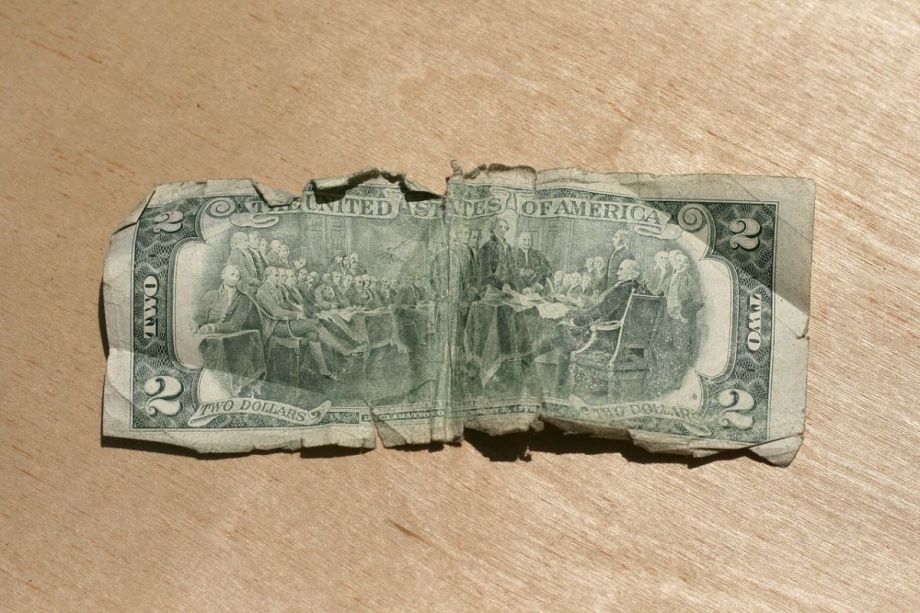
The national poverty rate and median income level both went unchanged in 2014, despite the economy posting better job growth than any year since Y2K. That’s one of the ominous takeaways from new figures released yesterday by the U.S. Census Bureau in its Current Population Survey (CPS). Those worrisome signs were then redoubled with the Bureau’s annual American Community Survey (ACS) numbers, released this morning. Essentially, the duo of data dumps portrays an economy recovering strongly from the Great Recession and yet leaving lower-income people behind.

Read entire report here.

Monday, September 21, 2015

Racism remains

This just goes on and on in this nation. Not long ago, I was told that this same thing happens continually in Dallas, especially as more companies move their headquarters our way. Our continuing racism remains insane, immoral and un-American. No one should ever, ever doubt our nation's need for a contiually renewed Fair Housing Act. Better yet, possibly what we really need is a Constitutional Amendment guaranteeing fair housing policies in the nation. Our battle against racism is not over, far from it. People who insist that things have changed and that the struggle is behind us are simply not right.  The struggle is more challenging than ever, given the "work arounds" and the new strategies to ignore the law. In all of this, I wonder where are the communities of faith?  And frankly, it's time for white folks to step up, speak up and insist on a new day for all of our African American citizens.  The following editorial statement appeared in The New York Times (9-15-15).]

How Segregation Destroys Black Wealth

 
The complaint, and the investigations that led to it, shows how real estate agents promote segregation — and deny African-Americans the opportunity to buy into high-value areas that would provide better educations for children and a greater return on their investments.
 
Over the course of nearly a year, the alliance reports, black and white testers posing as home buyers had drastically different experiences when they contacted a real estate company near Jackson, Miss. Agents often declined to show properties to black customers who were better qualified than whites, with higher incomes, better credit scores and more savings for down payments. Meanwhile, white testers who had expressed interest in properties in the majority-black city of Jackson were steered into majority-white communities elsewhere.
 
These problems are not limited to the South. Indeed, another alliance investigation covering a dozen metropolitan areas, including Atlanta, Austin, Birmingham, Chicago, Dayton, Detroit, New York, Philadelphia, Pittsburg, San Antonio and the District of Columbia, suggests that housing market discrimination is universal.
 
Continue reading here. 

Saturday, September 19, 2015

Important history

Col. James T. "Ty" Seidule, Ph.D., who teaches courses at West Point, like “History of the Military Art I: From Ancient Times Until the 20th Century" and contributed to “The West Point History of the Civil War," is kind of an expert here.


Thursday, September 17, 2015

The myth of welfare's survival

What Happens When Welfare Disappears

(Photo by Ildar Sagdejev)

“They don’t give that out anymore.”
“They told me to come back next year.”

“What’s that?”

These are just some of the things families said to Kathryn Edin and Luke Shaefer when they asked about Temporary Aid to Needy Families (TANF), the U.S. federal government’s cash assistance welfare program.

Edin and Shaefer are the authors of $2 a Day: Living on Almost Nothing in America, released last week. The book takes a long, hard look at what happens to the people and families left behind when welfare disappears.

They studied 18 families, and featured eight in the book. The stories put a human face on trends Edin and Shaefer found in U.S. Census Bureau data, which showed roughly 1.5 million households (with around three million children) were surviving on cash incomes of less than $2 per person, per day, in any given month.

Read more. 

Monday, September 14, 2015

Baby girl


[For over a year now, I've been corresponding with a young man who lives on Texas' Death Row in a prison in Livingston, Texas.  He has been locked up for well over a decade.  His appeals, almost exhausted.  He is a changed, radically changed man. 
Writing provides part of his coping strategy to manage the "lock down" conditions in which he lives (in solitary confinement for 23 hours a day).  Recently, he sent me the following essay about a visit he enjoyed with his daughter.]
Sitting across from my little girl, looking into her eyes, was a gift and a curse. 1- years- old, understanding the world, formulating her own opinions on life. She was as beautiful as the first day I saw her. I knew from the look in her eyes that it was time to break the news to her.
Looking at each other through 3-inch thick glass, attempting to drown out the numerous sounds that invade our time, our connection was strong, stronger than it’s ever been. It’s a gift to watch my daughter grow into a woman. To watch the youth in her; to watch the innocence; the love she has for me even though I haven’t physically been in her life daily, it was a gift to watch all of this inside a visitation room, locked in a cage. I haven’t touched my daughter in 11 years. Not knowing if I’ll ever touch her again because I’m waiting to be executed by the State of Texas is a curse. It’s a curse not only to me, but also to the numerous men and women that suffer the same circumstance, that hail from lower-class neighborhoods; under privileged communities, not only in Texas but across America.
Families are broken by America’s inhumane injustice system.

Looking in her eyes, I asked her, “Do you understand where Daddy’s at?”

In her innocent bubbly voice, she replied, “Yeah you’re in prison.”
“Do you know what for?”

“You killed somebody.”
“Do you understand how much time I have?”

This was where the hard part came in.

Again looking at me and replying in her jubilant voice, “Yeah Daddy, you’re in here for life!”
“Okay baby girl, listen to me. Have you ever heard of the death penalty or death row?” After shaking her head no, I continued, “The death penalty is the sentence handed down to certain people when they’re convicted of killing someone, like I was. You understand that?” She shook her head yes, but I could see from the look in her eyes that the joy was fading. “Death row is a place in prison where they live until they are murdered by the state. You still with me?” She shook her head yes but her stare was more intense.

“Baby girl, I don’t have a life sentence. I have a death sentence. I have the death penalty. I want you to understand that if we lose this fight in the courts I can be murdered by the state.”
I felt myself choking up, but I was trying my best to hold it in and be strong for my little girl. I wasn’t able to continue. My daughter broke down crying, placing the phone on the table, and falling into her mother’s arms. This was the first time I’ve seen my daughter cry since she was a baby.

I was broken.

The levees holding back the flood broke at that moment. As a father this was the hardest thing to deal with, your daughter crying right in front of you and not being able to comfort her.

Breaking this news was the hardest thing that I’ve ever had to do in my life. I always told myself that I would never lie to my kids, so I knew that I had to find the right time to break this devastating news. Too early and she wouldn’t understand the gravity of the situation, too late and she would learn from someone else and that was the last thing I wanted.

After doing my best to calm her down and explain to her that we were not going to give up our quest of being together again, she stopped crying and her fight came back into her eyes. She had so much of her Daddy in her.
This situation highlights the way the criminal justice system break families apart without conscience.

Many men and women are incarcerated with long prison sentences, or in my case, the death penalty when they were young and immature. Mistakes were made, crimes were committed, and sentences were handed out. Most importantly, children were left behind, breaking families apart.

After years of incarceration, the same men and women mature. They are not the same individuals that committed the crime they were convicted of, but due to the way the system is set up, the maturity they’ve attained can’t be used to help curb the continuous cycle of children being caught up in the criminal justice system.
Broken families are a huge problem within our communities. This recent interaction I had with my daughter emphasized what a relationship between a parent and their child means to both for their growth.

Something needs to be done about this and needs to be done soon for the sake of the families and the sake of our communities.

Think about this.

Christopher A. Young
999508
Texas Death Row