Time changes things. That's certainly the case with the evolution of the federal food stamp program. Today, the strategy encompasses more than just hunger, as was the case when the effort began in the early 1960s.
These days the Supplemental Nutrition Assistance Program (SNAP) focuses on the nutritional needs of low-income Americans who battled obesity and other chronic illnesses born of their poverty.
The following report, appearing in the March 28, 2011 edition of The Nation is very important. Let me know what you think after your read it.
Food Stamps for Good Food
Melanie Mason
[This article was written with the support of a Kaiser Permanente Institute for Health Policy fellowship.]
Coretta Dudley’s monthly grocery shopping strategy is as finely calibrated as a combat plan. Armed with $868 in Supplemental Nutrition Assistance Program (SNAP) benefits (the fancy new name for food stamps), she stops first at FoodMaxx, a discount supermarket in East Oakland, where she stocks up on four weeks’ worth of nonperishables: cases of noodles, cans of vegetables and boxes of the sugary cereals her kids like. She also buys fresh fruit—apples and pears and bananas and grapes—but those will be gone in a week. Then she swings by Wal-Mart for bread, eggs and milk. Later, she’ll hit the family-owned meat market, where she chooses hamburger and cube steaks. Other than $100 she sets aside to replenish the milk, eggs and cheese later in the month, that first multipronged attack will last her and her six children, ages 4 to 16, the whole month. That’s the idea, anyway.
Almost 500 miles away, in the City Heights neighborhood of San Diego, Tsehay Gebere has developed her own shopping plan at the Saturday farmers’ market. The lines are long, and the ten-pound sacks of oranges, plentiful at 9 am, will have disappeared by noon. But Gebere, a weekly fixture at the market, has the inside track. She persuades farmer Bernardino Loera to sock away four bags in his van. Forty-five minutes later, she gets back to Loera’s stall and collects her hoarded prize.
Like Dudley, Gebere receives food stamp benefits, for herself and her four children. Like Dudley, Gebere shops at discount supermarkets like Food 4 Less for most of her groceries. But while Dudley buys four bags of fruit every month, Gebere buys at least four bags every week—made possible by the free money she gets at the farmers’ market.
Yes, free money—though the technical name is “double voucher.” The market matches a certain amount of money from a customer’s federal food assistance benefits, essentially doubling the customer’s purchasing power. City Heights was one of the first double voucher markets in the country; there are now more than 160 participating farmers’ markets in twenty states. They reach just a tiny fraction of the more than 43 million Americans receiving food stamps. But their very existence raises questions about SNAP’s identity: is it a welfare program or, as its recent name change suggests, a nutrition program? These questions are the subject of lively debate in USDA offices and advocacy circles, where the idea of giving extra money for fruits and veggies, innocuous as it may seem, is exposing fault lines between traditional advocates for the poor and a new coalition of healthy-food activists.
The underlying premise of the modern food stamp program, shaped in the Kennedy/Johnson years, was that the American poor were starving and in need of calories, any calories at all. But there is now a well-documented overlap between the country’s staggering rate of “food insecurity” (the term used by the USDA in lieu of “hunger”) and its escalating obesity rates. In 2009, 43 percent of households below the federal poverty line experienced food insecurity. And if you’re poor, you’re more likely to be obese. Nine of the ten states with the highest poverty levels also rank in the top ten of obesity rates.
That one can be simultaneously food insecure and obese seems like a paradox. But consider that many low-income neighborhoods have few full-service supermarkets. Grocery shopping in the neighborhood likely means buying at corner stores with limited options for healthy choices. Even if those options do exist, they are not necessarily the rational economic choice for someone on a tight budget. The cost per calorie for foods containing fats and oils, sugars and refined grains are extremely low, but these are precisely the foods linked to high obesity rates. Healthy choices like fruits and vegetables are as much as several thousand times more expensive per calorie.
In a California Department of Public Health survey of eating habits, low-income people said they knew the importance of healthy eating. But they still eat fewer fruits and vegetables than the government recommends, less than the American population as a whole. “People said they couldn’t afford it,” says George Manalo-LeClair, legislation director with the California Food Policy Advocates. “It’s cost.”
At the heart of this whole mess—poverty, hunger and declining health—is the food stamp program. Nationwide, the average SNAP beneficiary received $125.31 per month in fiscal year 2009. If food stamps constitute a person’s entire food budget—as often happens, even though the program is intended to supplement recipients’ own money—that translates to just under $1.40 per meal. If you’re looking to buy something that will satiate you for $1.40, you probably won’t be buying broccoli.
Researchers have long studied whether food stamps contribute to obesity. Previously the conclusion was, probably not. But in an Ohio State University study released in the summer of 2009 the finding was, quite possibly yes. The study found that the body mass index (BMI) of program participants is more than one point higher than nonparticipants at the same income level. The longer one is on food stamps, the higher the BMI rises.
To read on click here.
Tuesday, March 15, 2011


Monday, March 14, 2011
Pro Life?
Clearly the Texas legislature functions as a strongly "pro-life" elective body. . .up to a point.
The legislators' decisions during this session indicate that they are determined to take rather drastic measures to protect the unborn. However, once a child arrives in a low-income family, all bets are off!
The following story was reported by Christy Hoppe on the actions of our elected representatives appeared in The Dallas Morning News last Thursday, March 10.
The notion that non-profit organizations and churches can pick up the slack in the budget is simply ill-informed. Further, the costs associated with cuts in funding for the needed care typically are passed along by medical professionals to those with private insurance. The fact is, helping poor children helps us all.
But, you read the report and let me know your reactions.
Bill on pre-abortion sonograms comes as Texas legislators plan to slash contraceptive, OB-GYN care for poor
AUSTIN — The Legislature’s push to limit abortions by compelling women to see a sonogram of fetal development comes as the state is cutting back on medical services to low-income pregnant women.
Republican lawmakers are poised to slash $850 million from pregnancy care and family planning in the next two-year budget — a 29 percent cut from current spending.
That would shut down avenues for poor women to find contraception and choke off payments to OB-GYN doctors who might care for those who become pregnant, advocates say.
“There is a responsibility that comes with this desire to tell women what to do with their pregnancy. Clearly, we’re not meeting it,” said Rep. Mark Strama, D-Austin, who has sponsored a bill to extend women’s health services.
Abortion opponents say that although the budget crunch is real, the sonogram requirement isn’t connected to it.
“We can’t solve our problems by eliminating people,” said Kyleen Wright, president of Texans for Life and a strong supporter of the sonogram requirement that both the House and Senate have approved.
The solution, she said, is for private pregnancy crisis centers, adoption services, religious groups and communities to step up their help for poor women.
“We will pick up the pace. We will meet the need,” Wright said.
Fifty-five percent of Texas births are to women on Medicaid.
Payments to doctors
Most of the proposed budget cuts would come through reducing payments to doctors, who are reimbursed for the care they provide pregnant women on Medicaid. It means physicians will either turn away poor patients or lose money treating them.
Tom Banning, chief executive of the Texas Academy of Family Physicians, outlined a grim reality: Medicaid reimburses doctors 70 percent for the cost of services. Most physicians make up the losses in their charges to privately insured patients, but the proposed cuts make that equation harder.
The state has cut reimbursements 2 percent this year and is proposing 10 percent cuts for next year. In addition, Congress is considering a Medicare reimbursement cut of 31 percent.
“It’s got the doctors completely spooked,” Banning said, and many plan to stop seeing patients who require federal help. That will drive more patients to emergency rooms, where their conditions are often worse and
more expensive to treat.
In Athens in East Texas, a group of family doctors began offering prenatal screening for Medicaid patients three years ago. When they started, 120 newborns a year from the area were ending up in the neonatal intensive care unit of Dallas County’s Parkland Memorial Hospital, Banning said.
Last year, it was down to two infants. But if doctors’ payments are cut, “you’ll see a tidal wave hit the emergency room of women who haven’t gotten any prenatal care,” Banning said.
To read entire report click here.
Sunday, March 13, 2011
Circles and ashes

We confess that the circle of love is repeatedly broken because of our sin of exclusion.
We create separate circles: the inner circle and the outer circle, the circle of power and the circle of despair, the circle of privilege and the circle of deprivation.
Forgive us our sins, as we forgive all who have sinned against us.
We confess that the circle of love is broken whenever there is alienation, whenever there is misunderstanding, whenever there is insensitivity or a hardening of heart.
Forgive us our sins, as we forgive all who have sinned against us.
We confess that the circle of love is broken whenever we cannot see eye to eye,
whenver we cannot link hand to hand, whenever we cannot live heart to heart and affirm our differences.
Forgive us our sins, as we forgive all who have sinned against us.
Through God's grace we are fogiven, by the mercy of our Creator, through the love of Jesus Christ, and in the power of the Holy Spirit.
Amen.
Friday, March 11, 2011
Budget cuts and low-income backs
State, local lobbyists push to save programs from budget ax
By Kevin Bogardus and Keith Laing - 03/08/11 06:35 AM ET
State and local government officials are flooding Washington to lobby against spending cuts that they say fall disproportionately on domestic programs.
In interviews with The Hill, lobbyists for state and local governments said they understand that the ballooning federal deficit is likely to reduce federal support for roadwork, law enforcement and affordable housing.
But they argue that the sacrifice needed to reduce the deficit should be shared across the board — including by Medicaid, Medicare and defense programs — and not just fall on domestic programs.
“You can’t really solve the deficit by just cutting discretionary, non-military spending. It is such a small part of the budget,” Larry Naake, executive director of the National Association of Counties (NACo), told The Hill. “You end up destroying programs that help a lot of people at the local level.”
The county officials’ group is meeting in Washington this week for its annual legislative conference. Close to 1,600 NACo members will be in town, and many are expected to lobby their home-state delegations about the budget cuts.
The group is concerned about the funding cuts in President Obama’s 2012 budget request and objects to the cuts passed by the House in February for the remainder of fiscal 2011.
Nevertheless, Naake said NACo could support freezing domestic spending at fiscal 2010 levels.
“Once the [continuing resolution] is finished, we will have to start on the proposed budget next year. But it’s not as drastic as anything the House is proposing,” Naake said. “Share the pain across the board, not just with domestic programs.”
One of the biggest priorities of county officials will be protecting funding for Community Development Block Grants (CDBGs). NACo members are being encouraged to wear “Save CDBG” buttons on their suit lapels as they make the rounds on Capitol Hill.
The Department of Housing and Urban Development runs the grant program, which helps local government officials fund affordable housing and anti-poverty programs as well as infrastructure development.
Under the House Republican continuing resolution, the grant program would be reduced from about $4 billion to $1.5 billion. Other programs that face funding reductions under the legislation are the federal transit program, which would go from $10.7 billion to $10.2 billion; the high-speed rail initiative, which would see its current $3.7 billion in funding wiped out; and community health center grants, which would be reduced by $1 billion.
Naake said the budget cuts would only lead to more unemployment during the tough economic times.
To read entire report click here.
Thursday, March 10, 2011
Cash to the poorest
Novel ideas here, but not surprising results. When we lead with taking the people with the challenges seriously, we usally get remarkable outcomes as a return on our investment!
Read and tell me what your think.
 Giving Money to the Homeless Might Actually Work
Nicola Twilley
Food Editor
A few months ago, the Joseph Rowntree Foundation, a UK-based nonprofit that does amazing work in the field of poverty and social exclusion, issued a surprising report that deserves a much wider readership.
The study evaluated the success of a radical new way of working with the long-term homeless. Instead of soup kitchens, shelters, and mobile health clinics, the charity Broadway simply selected 15 homeless people that their outreach workers had found the hardest to reach (one had been on the streets for an astonishing 45 years), asked them what it was they needed to change their lives—and then bought it for them.
One asked for sneakers and a prepaid cell phone, one needed cash to pay off a loan, one wanted a TV and a comfy chair (to make the move into hostel accommodation more attractive), and one requested a camper van. Each of them received the money to purchase exactly what they asked for, with the condition that they also had to choose a personal "broker" who would help them write a budget.
Two refused to engage with the pilot project altogether, but of the 13 who agreed to take part, 11 are now off the streets. Several have entered treatment for addiction and mental health issues, some have reconnected with their families, and all are exhibiting an enhanced ability to function independently in society (i.e. paying bills, signing up for welfare, and turning up for training courses, etc.). The participants' own comments give a clue as to why the intervention worked so well:
To read the entire essay click here.
Read and tell me what your think.

Nicola Twilley
Food Editor
A few months ago, the Joseph Rowntree Foundation, a UK-based nonprofit that does amazing work in the field of poverty and social exclusion, issued a surprising report that deserves a much wider readership.
The study evaluated the success of a radical new way of working with the long-term homeless. Instead of soup kitchens, shelters, and mobile health clinics, the charity Broadway simply selected 15 homeless people that their outreach workers had found the hardest to reach (one had been on the streets for an astonishing 45 years), asked them what it was they needed to change their lives—and then bought it for them.
One asked for sneakers and a prepaid cell phone, one needed cash to pay off a loan, one wanted a TV and a comfy chair (to make the move into hostel accommodation more attractive), and one requested a camper van. Each of them received the money to purchase exactly what they asked for, with the condition that they also had to choose a personal "broker" who would help them write a budget.
Two refused to engage with the pilot project altogether, but of the 13 who agreed to take part, 11 are now off the streets. Several have entered treatment for addiction and mental health issues, some have reconnected with their families, and all are exhibiting an enhanced ability to function independently in society (i.e. paying bills, signing up for welfare, and turning up for training courses, etc.). The participants' own comments give a clue as to why the intervention worked so well:
To read the entire essay click here.
Wednesday, March 09, 2011
Concern for justice: central to faith

Ecclesiastes 4:1
Tuesday, March 08, 2011
CitySquare clinic impact

Here’s what we found:
a. CitySquare patients were half as likely to be admitted to BUMC as their non-CitySquare counterparts.
b. When admitted, the average length of stay for our patients was 4.6 days, compared to 5.6 days for the non-CitySquare, uninsured patients.
c. When admitted, the average cost of an inpatient stay for a CitySquare patient was $6,500, compared to $9,100 for non-CitySquare, uninsured patients.

Clearly, the partnership we enjoy with the Baylor Health Care System and Health Texas Provider Network is paying off for and in our community.
Monday, March 07, 2011
Food for All: Community Hunger Day March 9, 2011

At CitySquare, we believe in food for all. Not just food to fill the belly—food to nourish the body, which includes fresh produce and other foods rich in protein, vitamins and fiber. Proper nutrition is essential to good health, and good health is essential to being able to fully-engage in life. It is nearly impossible to hold down a steady job, perform well in school or be a patient, gracious member of a family without good health. The problems we see every day come from harsh realities: Texas has the 2nd highest rate of food insecurity and the highest rate of child hunger in the U.S. Wwe must do better as a people and as a community!
CitySquare is waging war on hunger and malnutrition, and we invite you to join us in the fight. Below are four primary points of engagement for you:
Advocacy Opporunities around Food For All
Partner with CitySquare in our public policy efforts to make sure every man, woman and child has the food he or she needs to be healthy and strong.
March 9, 2011--Community Hunger Day: Fast for a day in honor of the men, women and children in our community who do not have adequate food and donate the amount you would have spent to CitySquare or another local food pantry. Here's more information about this event.
March 10, 2011--FREE Screening of the film, “Food Stamped”: THE SCREENING IS SOLD OUT. Find out exactly how tough it is to adequately nourish your family on food stamps. Please visit foodstamped.com for more information about the documentary. Registration is now closed for the FREE private screening.
April 7, 2011--Urban Engagement Book Club featuring Generation Extra Large: Rescuing our Children from the Epidemic of Obesity by Lisa Tartamella at the Highland Park United Methodist Church. Register now!
Sunday, March 06, 2011
American wisdom from a "founder"
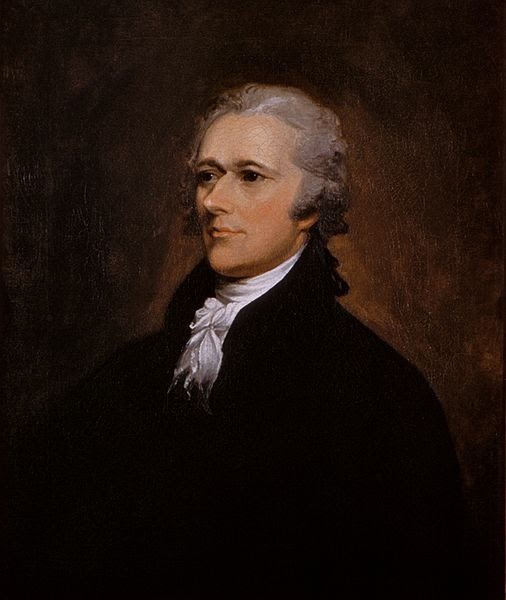
"Happy it is when the interest which the government has in the preservation of its own power coincides with a proper distribution of the public burdens and tends to guard the least wealthy part of the community from oppression!"
Alexander Hamilton
Federalist Papers, #36
Saturday, March 05, 2011
Friday, March 04, 2011
Income gap. . .
A report from "The Lookout," a Yahoo news blog: a problem possibly more toublesome than the national debt. . .
Wed Feb 23, 5:13 pm ET
Separate but unequal: Charts show growing rich-poor gap
By Zachary Roth
The Great Recession and the slump that followed have triggered a jobs crisis that's been making headlines since before President Obama was in office, and that will likely be with us for years. But the American economy is also plagued by a less-noted, but just as serious, problem: Simply put, over the last 30 years, the gap between rich and poor has widened into a chasm.
Gradual developments like this don't typically lend themselves to news coverage. But Mother Jones magazine has crunched the data on inequality, and put together a group of stunning new charts. Taken together, they offer a dramatic visual illustration of who's doing well and who's doing badly in modern America.
Here are three samples:
This chart shows that the poorest 90 percent of Americans make an average of $31,244 a year, while the top 1 percent make over $1.1 million:
 According to this chart, most income groups have barely grown richer since 1979. But the top 1 percent has seen its income nearly quadruple:

And this chart suggests most Americans have little idea of just how unequal income distribution is. And that they'd like things to be divvied up a lot more equitably:

To see the rest of these fascinating charts, click on over to Mother Jones.
[Is it just me, or is this socially unsustainable? LJ]
Wed Feb 23, 5:13 pm ET
Separate but unequal: Charts show growing rich-poor gap
By Zachary Roth
The Great Recession and the slump that followed have triggered a jobs crisis that's been making headlines since before President Obama was in office, and that will likely be with us for years. But the American economy is also plagued by a less-noted, but just as serious, problem: Simply put, over the last 30 years, the gap between rich and poor has widened into a chasm.
Gradual developments like this don't typically lend themselves to news coverage. But Mother Jones magazine has crunched the data on inequality, and put together a group of stunning new charts. Taken together, they offer a dramatic visual illustration of who's doing well and who's doing badly in modern America.
Here are three samples:
This chart shows that the poorest 90 percent of Americans make an average of $31,244 a year, while the top 1 percent make over $1.1 million:


And this chart suggests most Americans have little idea of just how unequal income distribution is. And that they'd like things to be divvied up a lot more equitably:

To see the rest of these fascinating charts, click on over to Mother Jones.
[Is it just me, or is this socially unsustainable? LJ]
Thursday, March 03, 2011
Technology and a prayer breakfast!
So, while I am at the mic welcoming everyone to our annual urban ministries prayer breakfast at Dallas Market Center (cool venue!), my buddy, Jerermy Gregg, aka Captain, fires off a Tweet that sends the photo below to only the good Lord knows where!
Technology! Amazing!
Thanks for being there this morning, Captain!
Best,
Col K

Technology! Amazing!
Thanks for being there this morning, Captain!
Best,
Col K

Evangelical Christians and budget cuts
Interesting report from the Pew Research Center published in Christianity Today magazine. What do you think?

Polling Evangelicals: Cut Aid to World's Poor, Unemployed
Tobin Grant
posted 2/18/2011 02:08PM
A Pew Research Center survey suggests evangelicals prefer the government spend on schools, the military, and police.
The House of Representatives is working day and night in its effort to cut more than $60 billion from the federal budget. The House is considering a continuing resolution, a bill used to fund the federal government for the remainder of the year [passed earlier this week]. The bill includes deep cuts for environmental agencies, education, and foreign aid (except those related to security). It makes modest reductions for defense, homeland security, and police. These cuts are in line with the spending priorities of most American evangelicals.
Click here to read the entire report with helpful graphics.
Wednesday, March 02, 2011
Number 1 problem for public education and growing: poverty
[The following article by Katha Pollitt, "It Takes a Village, Not a Tiger," appeared in the February 28, 2011 edition of The Nation.]
 Are you a tiger mother, a soccer mom, a helicopter parent, an attachment mom, a permissive free spirit who just wants your child to be herself?
Congratulations.
Your kids have a good chance of turning out reasonably well. Not because you are a parenting genius who has hit on the perfect method but because you have the time and energy and cultural capital to give your child what he needs to be successful in today’s world no matter what child-raising method you choose.
You are probably not, for example, poor, homeless, functionally illiterate, socially isolated, an addict, in prison, living in substandard housing, working three low-paid jobs—or unemployed for life.
You have books in your house, and probably a computer too.
You know enough to help your child with homework—and if not, you have the money or networks to find a tutor.
You feel comfortable volunteering at your child’s school, being in the PTA, calling the principal, going to parent-teacher conferences.
You can afford to take your child to the doctor and the dentist for regular care.
If your child should happen to get arrested, as quite a few do—if he’s caught with pot, say, or spray-paints graffiti, or jumps a turnstile—there’s a good chance that the charges can be made to go away, or at least not become part of his permanent record.
Your ex may have run off with your best friend, your apartment may be too small, you may hate your job—but you are still a white-collar, college-educated, middle-class person. And that makes all the difference for your children.
The biggest barrier to educational achievement today is not any of the things the media talk endlessly about: poorly prepared teachers, badly run schools, too many tests, low standards.
It’s child poverty—which, like poverty in general, has just dropped out of the discourse.
To read the entire essay click here.

Congratulations.
Your kids have a good chance of turning out reasonably well. Not because you are a parenting genius who has hit on the perfect method but because you have the time and energy and cultural capital to give your child what he needs to be successful in today’s world no matter what child-raising method you choose.
You are probably not, for example, poor, homeless, functionally illiterate, socially isolated, an addict, in prison, living in substandard housing, working three low-paid jobs—or unemployed for life.
You have books in your house, and probably a computer too.
You know enough to help your child with homework—and if not, you have the money or networks to find a tutor.
You feel comfortable volunteering at your child’s school, being in the PTA, calling the principal, going to parent-teacher conferences.
You can afford to take your child to the doctor and the dentist for regular care.
If your child should happen to get arrested, as quite a few do—if he’s caught with pot, say, or spray-paints graffiti, or jumps a turnstile—there’s a good chance that the charges can be made to go away, or at least not become part of his permanent record.
Your ex may have run off with your best friend, your apartment may be too small, you may hate your job—but you are still a white-collar, college-educated, middle-class person. And that makes all the difference for your children.
The biggest barrier to educational achievement today is not any of the things the media talk endlessly about: poorly prepared teachers, badly run schools, too many tests, low standards.
It’s child poverty—which, like poverty in general, has just dropped out of the discourse.
The Democrats don’t talk about it, except to wag the finger at deadbeat dads and teen moms, and the media don’t talk about it except in the context of crime or individual triumph. In fact, from the coverage you’d think our current crisis chiefly affected the middle classes—office managers, newly minted lawyers, college grads who have to move back in with their parents—when actually the unemployment rate for people with college degrees is 4.2 percent, which is where it was for all Americans before the recession.
By contrast, for those with only a high school diploma unemployment is 9.4 percent; for high school dropouts it’s 14.2 percent. And those figures measure only those actively looking for work, not the millions who’ve given up or have never held a job (some 16.5 percent of black men over 20). All those women pushed off welfare, called success stories because they got a job as a receptionist or a security guard or a clerk, with supposedly the hope of something better to come? Forget them.
Inconveniently, though, the poor and near poor, whom we don’t care about, come attached to children, for whom we supposedly have some concern. So how are the kids doing?
Tuesday, March 01, 2011
More than food pantries. . .
This column appeared in The Dallas Morning News yesterday. David Beckmann, co-author, will deliver the keynote address at CitySquare's 16th Annual Urban Ministries Prayer Breakfast this Thursday, March 3 beginning at 7 a.m. at Dallas Market Hall.
Beckmann and James: We cannot ‘food bank’ our way out of hunger
Poverty and hunger are stark realities for many Texans. At 17 percent, the Texas poverty rate is the ninth-highest of the 50 states. The poverty rate among children is even higher, at 24 percent. Both Hispanics and African-Americans have poverty rates above the state average. Of the 15 U.S. cities with the highest poverty rates, six are in Texas.
Worse, Texas ranks second in households that struggle to put food on the table. There are strong links between hunger and poverty. The Texas food insecurity rates closely mirror the Texas poverty rates; 17 percent of Texans and 24 percent of Texan children live in households that can’t always afford groceries.
The poverty rate in Dallas is higher than the state average. Child poverty is significantly higher than the state average — 35.4 percent of children in Dallas are poor. The poverty rates of Hispanics and African-Americans in Dallas are also higher than the Texas average for each group — and almost double the overall poverty rate for the state.
Fortunately, we believe it is within our power to help ease the effects of the recession on people in need and to set the stage for rapid progress once our economy rebounds. Many of us help hungry people by contributing to food banks and charities. While this is important, all of the food collected by charities combined is only about 6 percent of what is provided by government nutrition programs.
We must continue to invest in U.S. safety-net programs, which cost just 14 cents of every federal dollar. Many families cannot afford cuts to free school breakfast and lunch, unemployment insurance, the Supplemental Nutrition Assistance Program (SNAP, formerly food stamps), the Special Supplemental Nutrition Program for Women, Infants and Children, and tax credits for working poor families.
Cutting these anti-hunger and anti-poverty programs would be damaging to people in need and to our still-fragile economy. Without these public efforts, Texas will sink even further below the national averages for numbers of citizens and their children living in poverty. We cannot allow this to happen to our low-income neighbors.
Spending on programs such as SNAP provides an immediate stimulus to local economies. Studies show that low-income families spend their SNAP benefits immediately — spurring greater economic activity in their communities. Every dollar in SNAP benefits generates almost $1.75 in economic stimulus — so the 11 percent of all Texans who receive SNAP benefits are significantly boosting local communities.
Americans are not the only people suffering. The world has almost one billion chronically hungry people. U.S. foreign assistance can do a great deal to give hungry and poor people the tools and opportunities they need to improve the lives of their families.
We will speak on these issues at the annual CitySquare (formerly Central Dallas Ministries) Prayer Breakfast in Dallas Thursday. What can you do? Urge members of Congress to not balance the budget on the backs of hungry and poor people at home and abroad. Encourage them to press forward instead with reforms to make foreign assistance more effective in reducing poverty. With the stroke of a pen, decisions are made that can address the fundamental reasons people are hungry and poor — in Texas, in the United States, and around the world. We believe God is moving in our time to overcome hunger and poverty, and God is calling us to change the politics of hunger.
David Beckmann is president of Bread for the World, Bread for the World Institute and the Alliance to End Hunger; his e-mail address is david@bread.org . Larry James is president and CEO of CitySquare; his e-mail address is ljames@citysq.org.
Monday, February 28, 2011
Join me for 16th Annual Urban Ministries Prayer Breakfast

Join us on March 3 for CitySquare's 16th Annual Urban Ministries Prayer Breakfast with keynote speaker World Food Prize laureate David Beckmann, one of the foremost U.S. advocates for hungry and poor people. He has been president of Bread for the World since 1991, leading large-scale and successful campaigns to strengthen U.S. political commitment to overcome hunger and poverty in the U.S. and globally.
Beckmann is also president of Bread for the World Institute, which provides policy analysis on hunger and strategies to end it. He founded and serves as president of the Alliance to End Hunger, which engages diverse U.S. institutions—Muslim and Jewish groups, corporations, unions, and universities—in building the political will to end hunger. He is also the author of the recently released book, Exodus from Hunger.
Bread for the World is a collective Christian voice urging our nation's decision makers to end hunger at home and abroad. Bread for the World members meet with and write personal letters and emails to their members of Congress. It is one of the largest organizations in the world dedicated to building the political will to end hunger.
About Bread for the World
Bread for the World is a collective Christian voice urging our nation's decision makers to end hunger at home and abroad.
God's grace in Jesus Christ moves us to help our neighbors, whether they live in the next house, the next state, or the next continent.
Learn more at http://www.bread.org/.
For details about this year's prayer breakfast go to http://dallasprayerbreakfast.org/.
Sunday, February 27, 2011
Observing justice
"Happy are those who observe justice, who do righteousness at all times."
- Psalm 106:3
- Psalm 106:3
Saturday, February 26, 2011
Last Shuttle launch seen from above. . .
Amazing video of Space Shuttle takeoff as seen from an airliner.
To go direct to the YouTube link click here.
To go direct to the YouTube link click here.
Friday, February 25, 2011

Private Screening of "Food Stamped"
CitySquare exists to fight the root causes of poverty by partnering with those in need. Working together as a community, we feed the hungry, heal the sick, house the homeless and renew hope in the heart of our city.
From the beginning, addressing the hunger needs of our neighbors has been at the heart of our work. In 1988, CitySquare began as a small store front food pantry. It is from this humble beginning that the work of CitySquare has grown.
Please join CitySquare for private screening of Food Stamped and find out exactly how tough it is to adequately nourish your family on food stamps.
When: Thursday, March 10, 2011 at 7:00 p.m.
Where: Angelika Film Center & Cafe (5321 East Mockingbird Lane, Suite 230, Dallas, TX 75206)
Food Stamped is an informative and humorous documentary film following a couple as they attempt to eat a healthy, well-balanced diet on a food stamp budget.
Nutrition educator Shira Potash teaches nutrition-based cooking classes to elementary school students in low-income neighborhoods, most of whom are eligible for food stamps. In an attempt to walk a mile in their shoes, Shira and her documentary filmmaker husband embark on the “food stamp challenge” where they eat on roughly one dollar per meal.
Along the way, they consult with food justice activists, nutrition experts, politicians, and ordinary people living on food stamps, all in order to take a deep look at the struggles low-income Americans face every day while trying to put three-square meals on the table.
To register for the showing click here.
Don't miss it!
[Brought to you by the Public Policy Department of CitySquare.]
Thursday, February 24, 2011
AmeriCorps on congressional chopping block

The return on investment in AmeriCorps to American communities turns out to be enormous.
Think about it.
Students sign on to serve in communities of need and disadvantage, and in exchange receive an educational award at the end of their term of service, as well as a small stipend, health insurance and even a child care benefit, if needed. The education award must be used only to pay college tuition or to retire college debt.
In exchange for the benefits, AmeriCorps members take assignments in youth programs, mentoring efforts, community development projects, housing construction, architectural work, children's education programs, health and wellness centers--the list goes on and on.
Here at CitySquare we've enjoyed the benefit of a large AmeriCorps team that has allowed us to bring innovative programming to many low-income communities in inner city Dallas. It has been amazing to watch our AmeriCorps team members work hard to benefit others. It has also been thrilling to watch them grow, learn and extend themselves beyond the boundaries of their beginnings! We've hired a number of the members following the completion of their national service. Typically, AmeriCorps members "sign on" for a life of community service as a result of their experience as an AmeriCorps member. One of their mottos, "Getting Things Done!" really gets at the essence of AmeriCorps.
Here's how you can help TODAY:
Please write, call and/or visit your member of Congress and your two Senators to express your support for fully funding the Corporation of National and Community Service. You action could help save a vital, American expression of our commitment to higher education and community service.
For information visit http://www.saveservice.org/.
For information about contacting your member of Congress and your Senators visit http://www.house.gov/house/MemberWWW_by_State.shtml and http://senate.gov/general/contact_information/senators_cfm.cfm.
Act now to help save AmeriCorps!
Wednesday, February 23, 2011
Workforce training gets cut in US House budget proposals
Here's the latest from Washington on the current budget discussions and workforce training/development.
The Continuing Resolution passed by the U. S. House of Representatives last Saturday de-obligates, rescinds and removes the Workforce Investment Act (WIA) from any current or future funding.
This action comes as a surprising development, and hardly logical considering ongoing unemployment and underemployment in the nation. It is, however, a fact of the current House Bill.
By any measure, this is unprecedented. Here in Dallas our workforce commission has operated without decline or interruption for more than 27 years. The nation depends on the workforce system for retraining, remediation, re-employment, national emergency re-employment and youth workforce preparation.
Although the House has determined that the system is expendable, provisions to fund the WIA remain in the budgets developed by the Obama Administration and the U. S. Senate.
The removal of workforce would cut Dallas capacity and space by half.
More of the same: penny wise, pound foolish.
We may perish by movement to the extremes.
Tuesday, February 22, 2011
Archie Bunker's solution to skyjackings to visit Texas campuses
Years ago an "All in the Family" program featured Archie Bunker's solution to airline skyjackers. It went something like this: "Sure dare, Meathead, yous pass out the 45s as people get on da plane and yous solve your problem!"
Apparently the Texas legislature agrees. They seem to be adopting the same logic as Bunker in regard to the campuses of Texas colleges and universities. I couldn't believe this report that appeared in The Dallas Morning News on Monday, February 21, 2011.
Have we simply lost our minds?
Read it and tell me what you think.
Legislation to allow concealed handguns on Texas campuses worries Dallas-area students
By LAUREN MICHAELS and AMBER BELL
Staff Writers
Published 21 February 2011 01:30 PM
Supporters of legislation that would allow students and faculty to carry concealed handguns at colleges and universities in Texas say their goal is to make campuses safer.
But some of the Dallas-area students they hope to protect say they’d feel less secure knowing their peers might be armed.
“If the gun was out there, I would feel uneasy,” said Russell Ansley, a junior at the University of Texas at Dallas. “It could create an atmosphere of hostility.”
Phil Montgomery, a junior at the University of North Texas, said he’d rather see more security officers than ask students to pitch in.
“I don't feel I should have to take a gun in order to be safe at school,” he said. “Having an officer or two in a building would be more beneficial than having any kid that wanted to bring their own weapons to school.”
The bill has broad support in the Legislature but faces several hurdles before becoming law. Neither the House nor Senate has considered the measure. Texas would be the second state, after Utah, to pass such a broad-based law.
The measure’s proponents say it could help prevent campus gun violence, such as the shootings at Virginia Tech in 2007, Northern Illinois in 2008 and UT-Austin just last year.
Click here to read entire report.
Monday, February 21, 2011
Central Dallas CDC News: Dallas Observer report on Downtown affordable housing
The following most interesting column by Dallas Observer writer, Jim Schutze reveals the something of the growing importance of the work of the Central Dallas Community Development Corporation. Worth your time if you care about affordable housing in Downtown Dallas.
Dallas City Hall gets whopped upside the head for its low-income housing policy
By Jim Schutze Thursday, Feb 17 2011
Tell me first. To be a cool place to live, what does downtown Dallas need? Action. Tons and tons of people, not all super-rich, not all homeless, either.
But that's the problem with downtown. Rich people in the towers. Desperadoes in the alleys. Long empty sidewalks between.
For that to change, downtown needs to become affordable to jobsians. Not rich. Not poor. Not white, black or brown. Just people with jobs.
Guess what. I think maybe that door just cracked.
In a small room in the bowels of City Hall at 8:30 in the morning on one of those hard weather days last week, an obscure body voted to change direction on the renovation of a handful of old office towers—known as the Atmos Project.
It was the first hint of a whole new thing, and it only happened because some guys whopped the city upside the head with a two-by-four. I will come back to that, of course, because I know you love head-whoppings.
The important thing is this: The city board, whose name is too long for me to mention yet, voted to put way more subsidized low-rent apartments into the Atmos re-development deal than originally planned.
For decades, Dallas has taken federal funds designed to foster low-income housing downtown and used the money instead to make downtown hotsy-totsy. The result is what you see now—notsy.
Click here to read the entire essay and get to the part about the Central Dallas CDC. . .
Saturday, February 19, 2011
Friday, February 18, 2011
You can help today. . .

Fact: CitySquare exists to engage "the poor" in crafting better lives for themselves and, in most cases, their children.
Fact: Hunger and worry about what to put on the table remains a real, pressing issue for far too many Dallas area families and individuals.
Fact: For more than two years now CitySquare has seen long lines around our Food Pantry, as more and more families depend on our presence to meet their food/grocery needs.
Fact: The quality of our food products has improved dramatically so that now we distribute fresh produce on a daily basis.
Fact: All that we do demands a steady stream of funding.
Fact: You can help today!
Here's how:
1) Visit www.CitySq.org or click here right now: DONATE.
2) Commit to become a monthly donor.
3) Join the "1,000 Voices Campaign"--for information contact me at ljames@CitySq.org or call me at 214.303.2116.
4) Walk with us over the next 10 days by making a contribution that will enable CitySquare to raise $10,000 by Tuesday, March 1, 2011!
5) Very important: Forward this post to all of your contacts on Facebook, Twitter, other social media, email contact lists and on blogs.
Don't wait! You can make a huge difference right now!
Thursday, February 17, 2011
Alamo-like plea for Texas public schools
Here's a report on a most creative plea by a Texas school superintendent to the Texas Legislature. The report appeared in The Washington Post. Thing aren't looking so good for Texas school children who attend our public schools. Hmmm. Now, there's a question: Wonder how many of our legislators send or sent their children to public schools?
Texas district schools chief issues plea in Alamo-like letter
By Valerie Strauss
This is an open letter issued by John Kuhn, superintendent of the Perrin-Whitt Consolidated Independent School District. Addressed to Texas legislators, this plea for help is modeled on the famous letter that William Barret Travis sent from the Alamo right before it fell in 1836 (the text of which follows Kuhn's). Kuhn refers to plans by Texas Gov. Rick Perry to cut billions of dollars from public school funding.
From: John Kuhn, Superintendent, Perrin-Whitt CISD
To: Senator Estes, Representative Hardcastle, Representative Keffer, and Representative King during these grave times:
Gentlemen,
I am besieged, by a hundred or more of the Legislators under Rick Perry. I have sustained a continual Bombardment of increased high-stakes testing and accountability-related bureaucracy and a cannonade of gross underfunding for 10 years at least and have lost several good men and women. The ruling party has demanded another round of pay cuts and furloughs, while the school house be put to the sword and our children's lunch money be taken in order to keep taxes low for big business. I am answering the demand with a (figurative) cannon shot, and the Texas flag still waves proudly from our flag pole. I shall never surrender the fight for the children of Perrin.
Then, I call on you my legislators in the name of Liberty, of patriotism & everything dear to the American character, to come to our aid, with all dispatch. The enemy of public schools is declaring that spending on a shiny new high-stakes testing system is "non-negotiable"; that, in essence, we must save the test but not the teachers. The enemy of public schools is saying that Texas lawmakers won't raise 1 penny in taxes in order to save our schools.
If this call is neglected, I am determined to sustain myself as long as possible and fight for the kids in these classrooms like an educator who never forgets what is due to his own honor & that of his community. Make education a priority!
With all due respect and urgency,
John Kuhn
Superintendent
Perrin-Whitt CISD
Here's the text of the 1836 letter:
Commandancy of the Alamo------
Bejar Fby. 24th 1836
To the People of Texas & all Americans in the world------
Fellow citizens & compatriots
I am besieged, by a thousand or more of the Mexicans under Santa Anna -----I have sustained a continual Bombardment & cannonade for 24 hours & have not lost a man ----- The enemy has demanded a Surrender at discretion, otherwise, the garrison are to be put to the sword, if the fort is taken ----- I have answered the demand with a cannon shot, & our flag still waves proudly from the wall ----- I shall never Surrender or retreat
Then, I call on you in the name of Liberty, of patriotism & every thing dear to the American character, to come to our aid, with all dispatch ----- The enemy is receiving reinforcements daily & will no doubt increase to three or four thousand in four or five days. If this call is neglected, I am determined to sustain myself as long as possible & die like a soldier who never forgets what is due to his own honor & that of his country ----- Victory or Death
William Barret Travis
Lt. Col. Comdt
P. S. The lord is on our side- When the enemy appeared in sight we had not three bushels of corn--- We have since found in deserted houses 80 or 90 bushels & got into the walls 20 or 30 head of Beeves---
Travis
Reported February 11, 2011; 11:13 AM ET
Wednesday, February 16, 2011
SPENT

Here's how they describe the challenge game:
We’re going to challenge the way you think about poverty and homelessness.Work hard. Do the right thing. Homelessness is something that will never happen to me. Sometimes, all it takes is one life-changing experience to land you on the streets: a job loss, death of a loved one, divorce, natural disaster, or serious illness. Next thing you know, a chain of events sends things spiraling out of control…
How would you cope? Where would you go? What would you do? Figure something out, right?
To take the SPENT challenge click here.
Let me know how you do!
Tuesday, February 15, 2011
Rising from Ashes
CitySquare Board member, Jon Halbert is executive producer of the upcoming feature film Rising from Ashes. Jon's interest in justice and reconciliation in Rwanda and around the world says everything about his role with us here at CitySquare.
CitySquare benefits enormously from Jon's involvement and leadership.
Check out the preview of the film set to be released at the Sundance Film Festival next year.
Rising From Ashes from T.C. Johnstone on Vimeo.
CitySquare benefits enormously from Jon's involvement and leadership.
Check out the preview of the film set to be released at the Sundance Film Festival next year.
Rising From Ashes from T.C. Johnstone on Vimeo.
Sunday, February 13, 2011
CitySquare Thrift: Customer Testimony
Now a word from an encouraging supporter of CitySquare (formerly Central Dallas Ministries):
Please, let me share an experience that I had over the holidays.
I recently replaced the behemoth tube television in my bedroom with an LCD - it was so cheap. Problem is...what to do with its giant box of a predecessor!
Ahhhhhh, I called the Central Dallas Ministries (now CitySquare) Thrift Store.
A person named Will answered the phone - I explained that I knew that they did pick-ups but hated to ask them to come for one item so, if they would pick up the tube, I would gather some other "stuff". Will said that they had time the following day and that he would call me in the morning to confirm a time.
He did so and said that they would arrive between one and two. They did so. Two fellows in a large truck arrived right on time, receipt in hand. They picked up the TV and sundry parkas. In my embarrassed appreciation, I muttered, "Gee, I feel terrible that you all are getting so little."
One of the gentlemen said, "Thank you so much. This will help a lot of people." Both politely shook my hand, thanked me profusely and wished me a happy holiday.
Wow! What about this experience differed from every other one I have had with [she mentions other organizations]? EVERYTHING!!! They did exactly what they said they would do, on time and as courteous as can be...not to mention appreciative and, in reality, they had helped me.
This is an organization populated by folks who have been homeless, had addictions, fallen on hard times and they are more professional and more courteous than any for-profit organization I can bring to mind.
The last week of the year most of us are cleaning out closets,garages and scurrying around to drop-offs. If you are engaging in this enterprise, I encourage you to consider the Central Dallas Ministries Thrift Shop. You can deliver items there, too, but they will gladly send a truck and the nicest people in the world if you, like me, have something you cannot lift or fit into the car.
And, by the way, the Thrift Store is really cool- also very professionally managed and since folks like us with some pretty decent "stuff" to donate have learned about it- you can find some fun things.
Here is their contact information. I encourage you to have a great new year's experience!
Hugs, Lou Ann
CitySquare Thrift Store
1213 N Washington Ave, 75204
Hours: M-F 9a-6p, Sa 10a-3p
Closed on Sunday and major holidays
972-231-2220
http://citysq.org/donate
Friday, February 11, 2011
Spending cuts--what will be the payoff?
As the Texas legislature targets a wide range of potential programs and departments for the budget knife, some program cuts could cost more than the cuts save, while making our communities less healthy, productive and safe for everyone. Take funding for programs that engage ex-inmates.
Budget cuts slice programs for ex-inmates
In some states, the number of people committing new felonies while on probation or parole has inched up, in part because of cuts to programs that helped former inmates stay out of prison
USA TODAY
By Kevin Johnson
February 10, 2011
NATIONAL — Cuts in probation and parole programs to reconcile state budget deficits could undermine recent successes in shrinking bloated prison populations, criminal justice officials say.
In some states, the number of people committing new felonies while on probation or parole has inched up, in part because of cuts to programs that helped former inmates stay out of prison. Other states are weighing substantial budget cuts to all parts of their criminal justice systems, including probation and parole programs.
Adam Gelb, director of the Pew Center's Public Safety Performance Project, says some of the most successful criminal justice programs launched in recent years are at risk. "The (financial) hole is so deep," says Gelb, whose non-partisan group has helped develop state programs for managing offenders outside prison. "Programs for convicted felons are an easy target."
Carl Wicklund, executive director of the American Probation and Parole Association, says the fiscal crisis is "pushing more people out of prison" with fewer people to supervise them and fewer dollars to support drug treatment, housing and job assistance. "We're setting these people up for failure," Wicklund says.
A report Tuesday by the Council of State Governments Justice Center, a bipartisan group that promotes public safety policy, urged lawmakers to spare programs that have been effective in reducing prison costs.
In Kansas, where officials just two years ago were spotlighting the success of the state's probation and parole strategy in reducing high prison costs, an additional 322 probationers returned to prison for committing new offenses in fiscal year 2010.
Overall, the portion of Kansas probationers who successfully completed their terms dropped to 54% in 2010 from 61% in fiscal year 2008, according to a January state report.
Roger Werholtz, Kansas' former corrections secretary, says the losses are "a casualty of the economic crisis" and stricter sentencing policies that added mandatory prison time for more offenses.
In the past two years, state records show, $10.1 million has been cut from four separate funds that support post-release rehabilitation efforts, including offender re-entry programs that match inmates with jobs, housing,
and substance abuse treatment. An additional $7.2 million in cuts have been proposed for fiscal year 2012, starting July 1.
"I had been getting invited to talk (to corrections officials in other states) about what we did right. Now I spend just as much time talking about what we could have done better," Werholtz says.
In Florida, the number of offenders who committed new felonies while on probation jumped from 7,164 in fiscal year 2007 to 9,000 in fiscal year 2009. The number declined slightly in fiscal year 2010 to 8,440. But Florida Department of Corrections spokeswoman Gretl Plessinger says there is concern that expected cuts to plug a $3.5 billion state budget shortfall could threaten those slight gains.
Among the most closely-watched budget battles, Gelb says, will be in Texas, as the state tries to close a deficit of up to $27 billion. Republican state Rep. Jerry Madden of Plano says cuts would threaten some
of the $240 million in treatment programs for some offenders who, without those programs, would have been ordered to prison.
Madden says the programs also were central to a slight drop in the number of parolees who returned to prison for committing new felonies in fiscal year 2010, from 24,692 in 2009 to 24,239. "We can't afford to go back (to growing prison populations)," he says. "We're not conceding anything yet."
Subscribe to:
Posts (Atom)